
Tag

food culture

Browsing

Not Just Grapes and Olives…Rice, Too.

You’ve seen thousands of photos of Italy and its rolling hills covered in rows of vines and narrow roads serpentining through vineyards. You’ve marvelled at hilltop medieval towns overlooking olive trees and you have definitely tasted both olive oil and wine. Although you may even have had the chance to enjoy a plate of risotto, you’ve probably never really wondered where the rice came from.

Rice… the Underminded Cereal

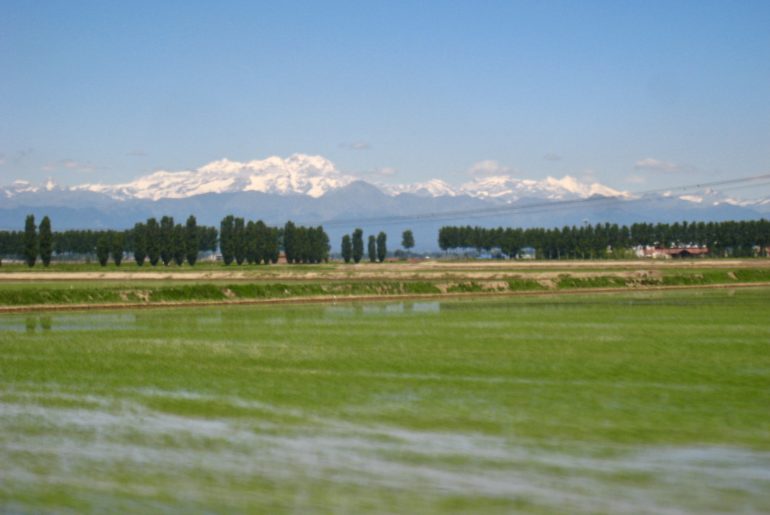
Italy not only produces rice for its traditional dishes, but is the number one producer and exporter in Europe. Ironically, they even export it to…China.  The majority of the rice production in Italy is divided amongst three provinces in the north. Vercelli, Pavia and Novara.
Italian Carnaroli Rice

Rice grows in flat areas, therefore over the years these provinces have seen an increase of interest by tourists to visit and explore these plains. Easy walking and cycling tours have dramatically increased, and honestly there is nothing more relaxing and educational than to do just that. Many of these 16th, 17th and 18th century majestic farms, or cascine as they are known, are to this day still functioning. Visitors can enjoy hours exploring the history and relax in the fresh air.

Restored Farms Brought Back to Life

In recent years, many more cascine have been restored to bring out their natural beauty. Up until the middle of the last century, hundreds of people would work in one of these cascine. They were located far from the towns (at least in those days it seemed far) and  needed to be self-sufficient. This meant having their own bakeries, butchers, blacksmiths, tailors and of course churches. Although these cascine were essentially working villages, art and creativity and decor weren’t overlooked while building them. They were also fortress-like and during the night time its gates would be closed to keep any undesirables out.

Affreschi, Tapestries, and Sculptures
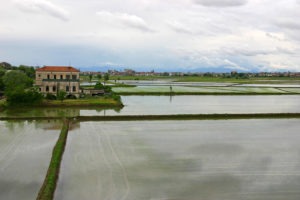
A Cascina amongst rice

Some of the most beautiful architecture can be found on these farms. Nowadays, walking or cycling along these roads and paths of the rice paddies gives you a great opportunity to view how things were three or four hundred years ago. Working in these fields was exceptionally hard work that both men and women shared equally. Women, aside from doing the traditional jobs of maintaining the household, were also very active as mondine, planting the rice and harvesting it. Now these risaie, (rice paddies) still exist, but there is only a dozen or so people needed to continue producing rice. Modernization in the sixties and later slowly eliminated the thousands of jobs that this industry employed. Nowadays, production has increased, but manpower has dwindled.

Sanctuaries Among the Rice Fields

These fields have also become sanctuaries for birds, pheasants, wild rabbits and other small animals. Many farms have donated land to wildlife sanctuaries and these co-exist with the farmers that still cultivate rice.
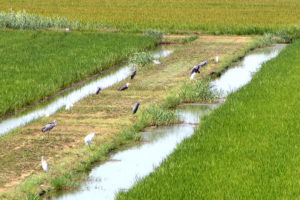
wild bird sanctuary in Italy rice fields
Photographs by Francesca Cesa Bianchi
  • Nowadays with the use of cars these risaie are not as so far away from bigger centres or towns. Reaching them is hardly a trek. Bike and hike trails are mostly paved, making a self-guided tour a pleasant addition to any trip to Italy.


5 Things You Probably Never Knew About Rice in Italy
  • The provinces of Novara and Vercelli are in the Piemonte region and the province of Pavia is in Lombardia. All are easily accessible by train and/or car. Milano Malpensa Airport is less than 90 kilometres from any of these three provinces.
  • The very famous types of rice grown in these areas are Arborio and Carnaroli. These kinds are ideal for the traditional dishes such as risotto or paniscia.
  • In the town of Casalbeltrame in the province of Novara,  there is a superb museum. L’ Civelhttp://www.casalbeltrameonline.it/  recreates the old traditional ways these risaie worked. You can walk through the guided tour (in English) and listen to the songs the mondine  would be singing while harvesting in the paddies. You can see the equipment and tools that were used, and re-live their methods of harvesting the rice from over 120 years ago. For this small town of less than a thousand habitants, this museum is truly a hidden gem. And since touring brings an appetite, I would recommend stopping at the trattoria which has the same name and enjoying a wonderful plate of paniscia.
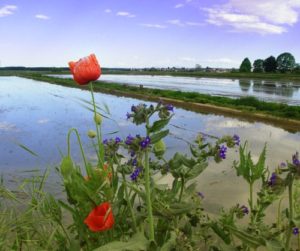
 

Rice fields in Northern italy

  • Rice seeds are planted in the spring and harvested in September or October. During the spring and summer, the paddies are full of water and the rice “plant” grows up to one and half metres or five feet tall. Once harvested, it is brought in to dry and aged. Aging increases the starch in the rice and makes for better cooking.
  • Italians and Italian dishes never use rice as a side dish. It is always served as a primo piatto (first course), such as risotto, which is usually reserved for starchy dishes. My personal favourites are Risotto allo Champagne or Risotto con Porcini (mushrooms).

Since these beautiful farms are  more easily accessible if have a car, I recommend you to read my post 3 Things to Know About Driving in Italy, to have a better understaning on what drives Italians…

“Til then…Buon viaggio.

Are  you travelling to Italy and are interested in my assistance, or would like to comment on my post?  Just drop a line below or contact me privately at info@italiabound.com.
 

5 Things to Know About Dining in Italy


Italy’s food culture is unique in many ways. From their passion with slow food, to the diversity of their cuisine varying from one region to an other, and often from town to  town. Food and eating together is the reason why Italians exists.

Life, relationships, family and even work often revolve around the table. Food is to Italians what the heart is to our body. Without it it’s society would die. Everything is planned around that. Although eating is important, just as important are the Italian etiquette around food and restaurants. often quite different from  North America.

 No Need to Tip

1- Unlike in North America where staffing is inexpensive because we expect the restaurant goers to pay for the hired help with tips, in Italy the servers and cooks have a set labour contract. Their wages are completely covered so you don’t need to tip. It’s never expected, but if you like to, it’s a minimal amount.

When is the Best Time to Eat?

2-  Restaurants are not always open ready to serve anytime you feel hungry, unless you are in a tourist infested area. Restaurants tend to open just before noon and stay open until 2:30 PM or so. In some cases, they don’t take tables past 2:00 PM.

They re-open again later around 7 o’clock in the evening and dinners are served until late.  It all depends on the location; downtown, suburbs, big cities, small towns or high traffic areas on highways

. The seasons also play a big role in when restaurants open and close. Most places are closed one day, some two days of the week, usually Monday, Tuesday but also Wednesday or Thursday.

That Seems like a lot of Food

3- Italians eat in courses at both lunch or dinner. They’ll have at least two plus the caffe.

Antipasti. (appetizers) Not to be confused with aperitivi.

Primi. (first dishes) usually those are starches, such pasta or risotto or soup.

Secondi. (second dishes) tent to be meats, fish. Often you would receive the meat by itself with no sides.

Contorni. (side dishes) Arrive with you secondi maybe salads, steamed and cooked vegetables or fries, etc. etc.  These are brought on different plates.

Formaggi (cheeses) Usually this will be a selection of local cheeses.

Dolci. (dessert)

Frutta. (fruit) It is common to finish with fresh fruit. And last but not least…

Caffè. This is always an espresso and sometime it’s corretto which means that grappa or another kind of liquor is added to the caffè. Never ever order a cappuccino or a macchiato at end of meal. It’s frowned upon.

Cover Charge?… for What?

4- Coperto is a cover charge for each person sitting down having dinner. This varies from 1 to even 5 Euros or so depending on the type of restaurant. A pizzeria is usually 1 to 2€ for instance. Osterie style restaurants may not even have one. High-end restaurants will be more. The charge goes back to the medieval days when the inns would charge for using the place when customers would bring  their own food and just used the inn as a refuge from the weather. The cover is for the linen, cutlery and bread. This would be posted on the menu so there are no surprises.

Free Food?

5- Aperitivi are not antipasti, so if you drop in at a bar around 6 o’clock or so you can go for a aperitivo and in most cases food is served with it free of charge. Yes, the food is free, as long as you buy a drink. Some bars (bars in Italy are cafés or wine tasting shops) offer apercena, which translated is aper (aperitif) and cena (dinner).

Here you can literally eat to your heart’s desire and all you pay for is your drinks. Often you do this standing up and/or outside the bar in the street while wandering in and out sampling and eating finger food and chatting the night away. I recommend finding at least one of these places while you are traveling. It’s a great way to see the Italian dolce vita at work while sampling different dishes and wines. Here you pay before you eat.

BONUS…

You must always ask for the bill, as waiters will not bring it to you automatically at the end of your meal. It would be considered extremely rude to do that. The reasoning behind this is that the evening is not finished just because the food is. Italians often stay and talk for hours after the caffè and only when they are ready to leave they ask ( by a hand wave) the bill.

DOUBLE BONUS…

Lately all over Italy and mostly in the larger cities a new phenomenon  is occurring.

Restaurants where the “ imbonitori” stand outside and invite you in. You’ve seen them in the Latin Quarters in Paris and there they belong. But in Italy…No thank you! Often these hosts offer a free appetizer or a drink (but you will pay for it in other ways) to entice you to enter. They may even tell you that they serve the best pasta in town.

It’s pretty obvious that these are only really inviting tourist as regular restaurant goers would never think of being duped by these individuals. If they need to ” invite”, the food is usually not that good. Even Italian tourists in their own country would never go here so why should you?

AVOID at all cost these places. Stay clear. But, if you do go, you then lose the right to complain that you’ve been to Italy and the food was terrible.  You have been warned.

“Uomo avvisato mezzo salvato”.

Translation : Man that has been warned,  is a man half saved”

‘Till then… Buon Viaggio!

Are  you travelling to Italy and are interested in my assistance, or would like to comment on my post?  Just drop a line below or contact me privately at info@italiabound.com.


Local Dishes in Italy: 5 Things to Help Identify Them

Local Dishes, Local Dishes , Local Dishes

1- Savouring local dishes is a must when travelling throughout Italy. If you see dishes named after the towns you are in, you won’t go wrong. When in Milan, for instance a Risotto alla Milanese would be a give-away that it’s a local dish.

Val Sesia italiabound.com slow food local ingredients
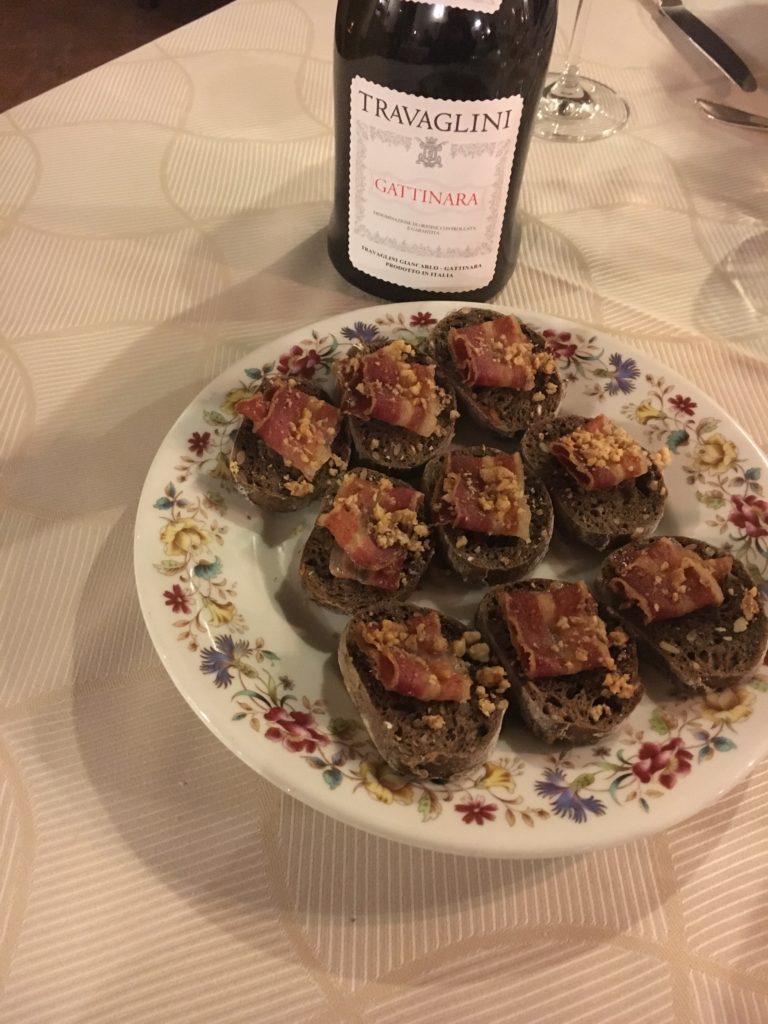
Rye bread tartine with lard, honey and nuts… and a bottle of Gattinara

2– Look in the menu for “piatti tipiciwhich means, “typical dishes”. Furthermore, if you dine at an osteria or trattoria, most likely, they would promote local dishes.

italiabound.com Il Cavenago slow food
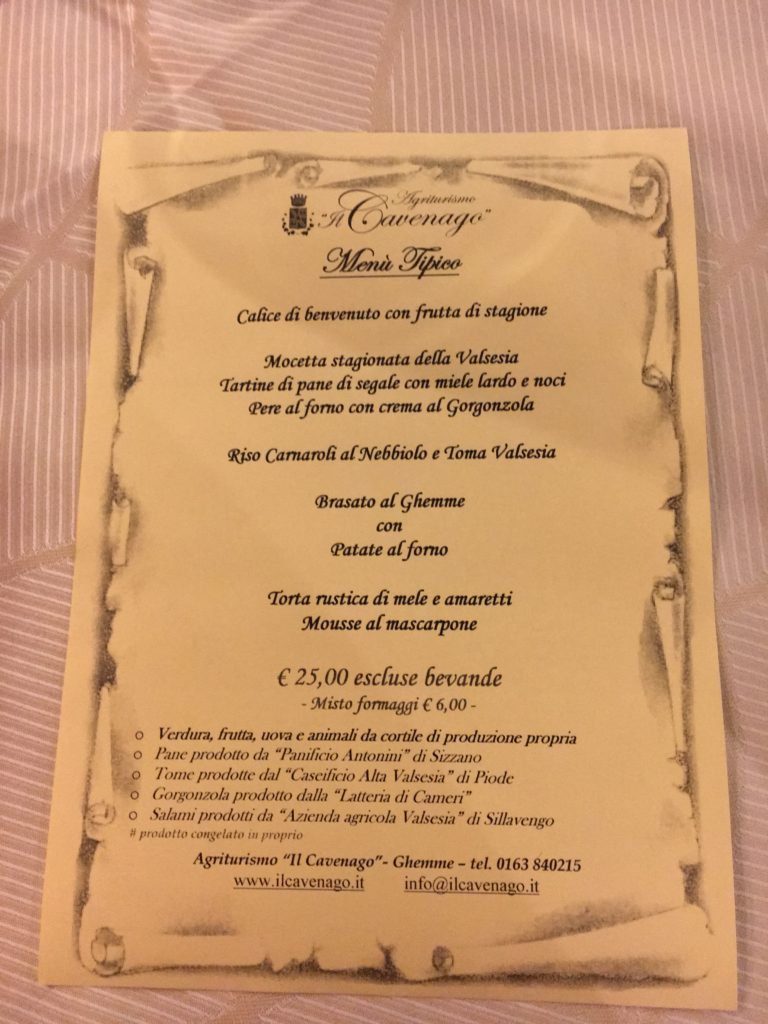
A menu promoting local producers, traditional ingredients and homestyle dishes at agriturismo Il Cavenago

Farmhouses Mean Freshness

3- Agriturismi are a guarantee for fresh, kilometre-zero ingredients. These farms grow the ingredients right on site. As a result, their neighbouring farms also often produce many of the ingredients for their menus, as the photo above illustrates. You can’t get it any fresher.

4- Look for DOC and DOCG wines. Hence, the origin of the ingredients is controlled and guaranteed. On the labels of cheeses and insaccati you’ll see the DOP stamp. Those ingredients are the best in quality, guaranteed and protected. 

You can purchase DOGC and DOP products anywhere in the world. Ask if a DOP product is local. If not, you know you’ll be eating quality products, just not from the area that you are in.

Read my blog on 13 Italian Cultural Habits... to above all, have a better understanding of Italian food culture, while travelling through Italy.

Markets and Festivals

5- At a mercato look for seasonal vegetables, fruits. No one toots their own horn better than Italians do. As a result, local businesses and towns love to promote typical ingredients, dishes and history.

slow food Italy food culture La Morra Italiabound.com
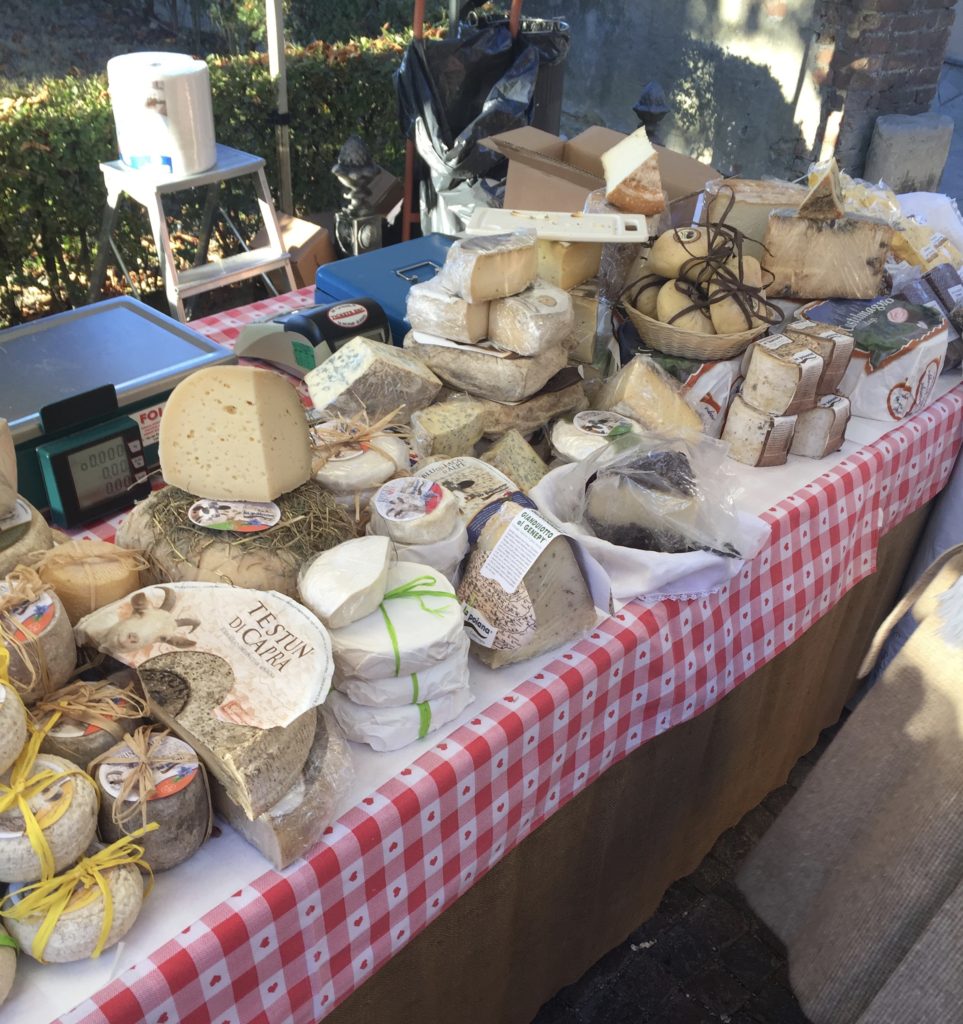
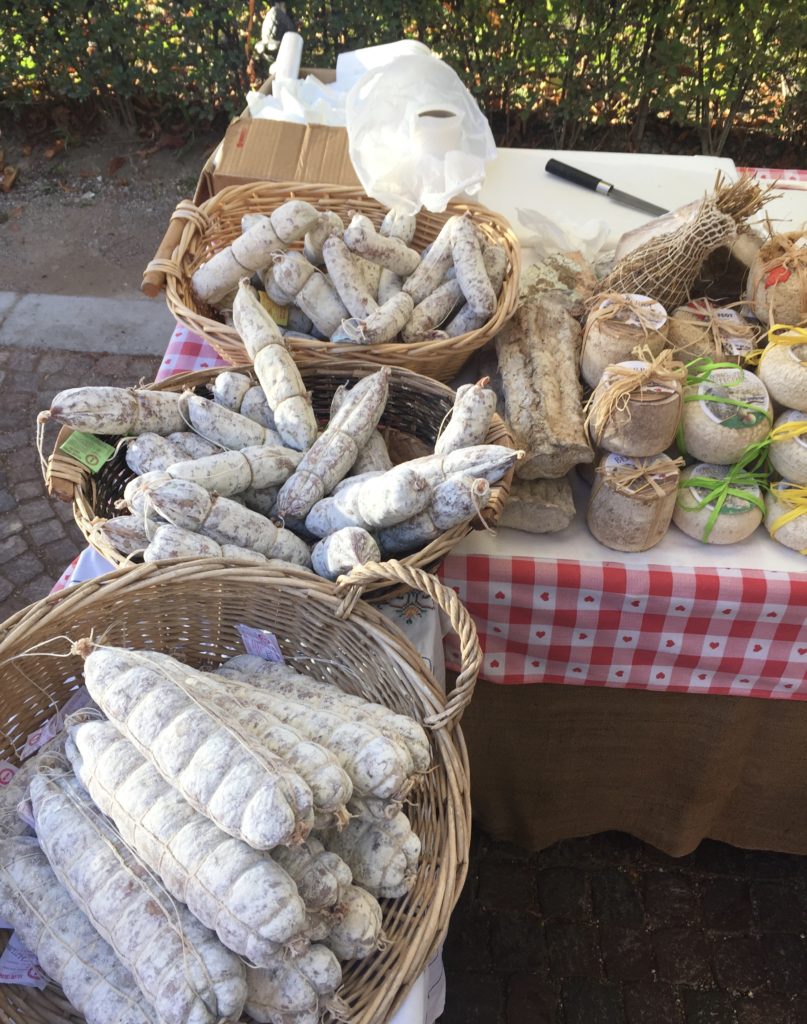
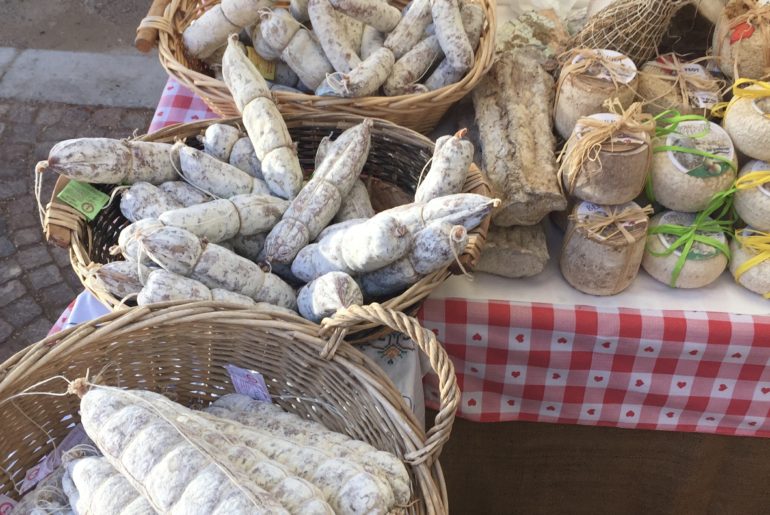
fresh cheeses at a market in La Morra in the Langhe

Bonus

6- Attend festivals or sagre in the areas that you are visiting. You may want to ask where and when these events are. Visit websites that promote these sagre. All over Italy, towns organize festivals to celebrate a harvest, a season, or a saint of some sort and therefore, will use any excuse to savour local traditional specialties.

Live Like the Locals Do

Tourists are not the only ones flocking to these sagre to try local dishes, drink local wines, and dance the night away. It has been an Italian way of life for generations.

One of my favourite hands down is Friuli DOC. This festival starts on the second Thursday of September. Over 100 000 visitors pour into the streets of the North Eastern city of Udine daily for four straight days to experience regional dishes, wines, spirits,  music, dances, and costumes.

slow food Italy food culture italiabound.com La Morra

Every piazza, viale, and roundabout has kiosks or tents sampling food from all over the region of Friuli Venezia Giulia. It’s an amazing event…and what an event it is. If you find yourself in the vicinity of Udine during  that week, you must take a detour and visit it at all costs.

The warm summer months bring people out to the many sagre. Italians spend  their weekends traveling from town to town in search of great food, wine, and folklore events. They definitely know how to celebrate life.

Eating fresh food and celebrating life is quintessential to Italians and probably the main reason for their existence.

If you interested in more information about Italy or help in organizing a trip there, please leave a message below or contact me privately at info@italiabound.com

‘Til then…Buon viaggio!

3 Things to Know about Gratuities in Italy… To Tip or Not To Tip

What about gratuities? Do I leave anything for the waiter?

How about gratuities? Clients often ask me that simple question. Its a cultural difference that we sometimes don’t understand.

1- Gratuities or Tips are a personal choice that are always appreciated, but never taken for granted or expected. Unlike North America, tipping is not expected and it doesn’t go towards subsidizing an income that should have been taken care of by the employer. Italians are proud people and one mustn’t confuse gratuities with a hand-out.

italiabound.com gratuities waiter

The best way to know if you should leave a gratuity or not is to ask yourself the following question: Am I tipping because he or she provided an exceptional service and went above and beyond my expectations? If the answer is yes, then a token of appreciation can be left on the table. Nonetheless, it is not mandatory. It should be out the goodness of your heart and not what people will think if you don’t.


  5 Things to Know About Dining in Italy


Know Who You Are Tipping

2- You never tip the owners of the business, such as in a restaurant, a salon,  or mechanic. Nor you should give gratuities because you feel bad for that individual for doing his/her job. Again, Italians are proud, and if they feel you are tipping because they think that you feel sorry for them, then they may see this as an insult and just may refuse the tip. If they do refuse it for whatever reason, please don’t feel insulted. Understand it and move on. Don’t force it.

3- Waiters have a set salary, as well  as tour guides. I would recommend a tip of appreciation for guides for showing you the sites. Taxi drivers are on salary so there is no need to tip. In any case, you just round the amount to the nearest Euro or so.

Rome italiabound.com gratuities waiter

A Gift Goes Further

Bonus- In some circumstances, it’s more appropriate and also more appreciated to give someone a gift instead of money for having gone beyond the call of duty. That would be more for owners of businesses or maybe the manager or concierge of a hotel. If you stayed several nights there and they accommodated with concert tickets, museum passes or really good recommendations for restaurants, then consider it. If you take in a cooking class for instance as a token of appreciation such as a gift, it goes further than money since in most cases it’s the owner/chef that gave the course… And if the gift is from your country… better yet. Italians appreciate when individuals go out of their way to make them feel special or appreciated and sometimes money is not the only reward.

If you know that you may possibly be running in one of these situations, you could purchase something in your country and have it ready if needed on your travels.  If someone really did something great for you,  you can always send it once you returned home.

‘Til then…Buon viaggio.

Are  you travelling to Italy and are interested in my assistance, or would like to comment on my post?  Just drop a line below or contact me privately at info@italiabound.com.
 

Langhe: Italy’s Best Kept Secret

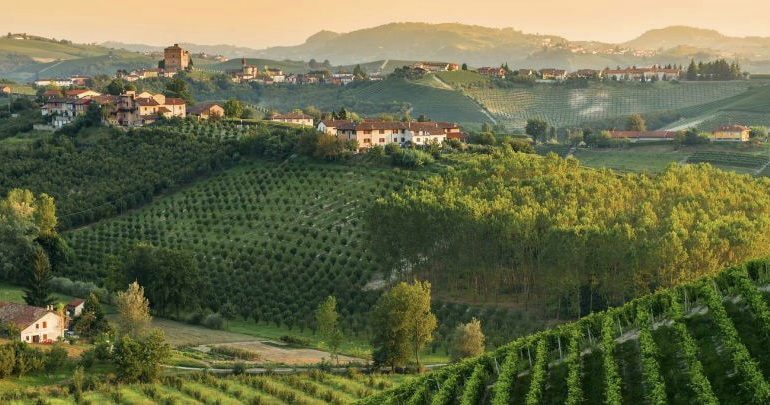
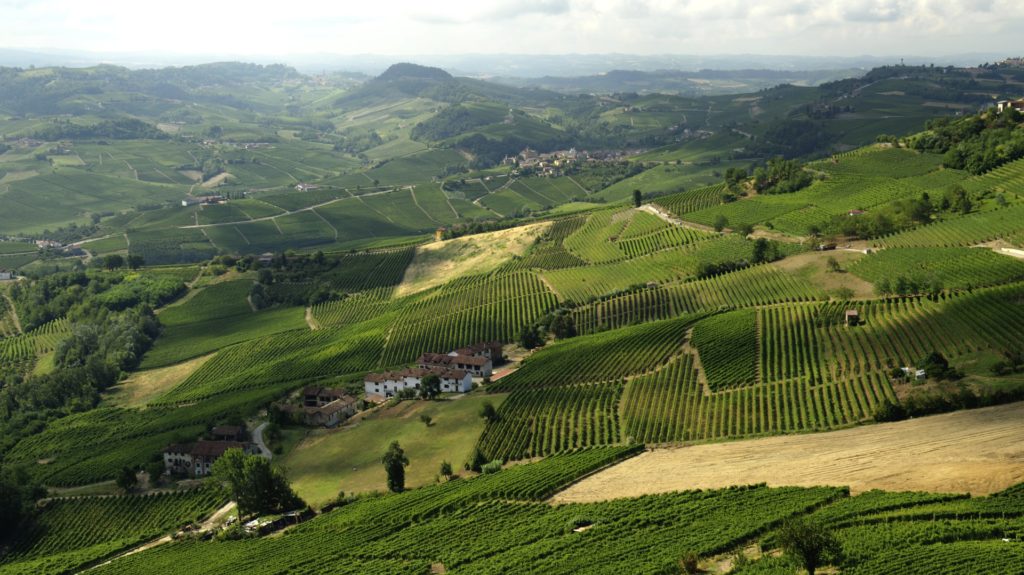
An incredible alternative to the Chianti area is Piemonte’s Langhe area. This rich wine region has everything that a tourist is looking for in a holiday. The Langhe area is first class in food, architecture, wine and nature. Barolo, Barbaresco, Dolcetto and Moscato are just a few of the many wines produced here and sold throughout the world. It is also an UNESCO  World Heritage protected region.

The Secret is out

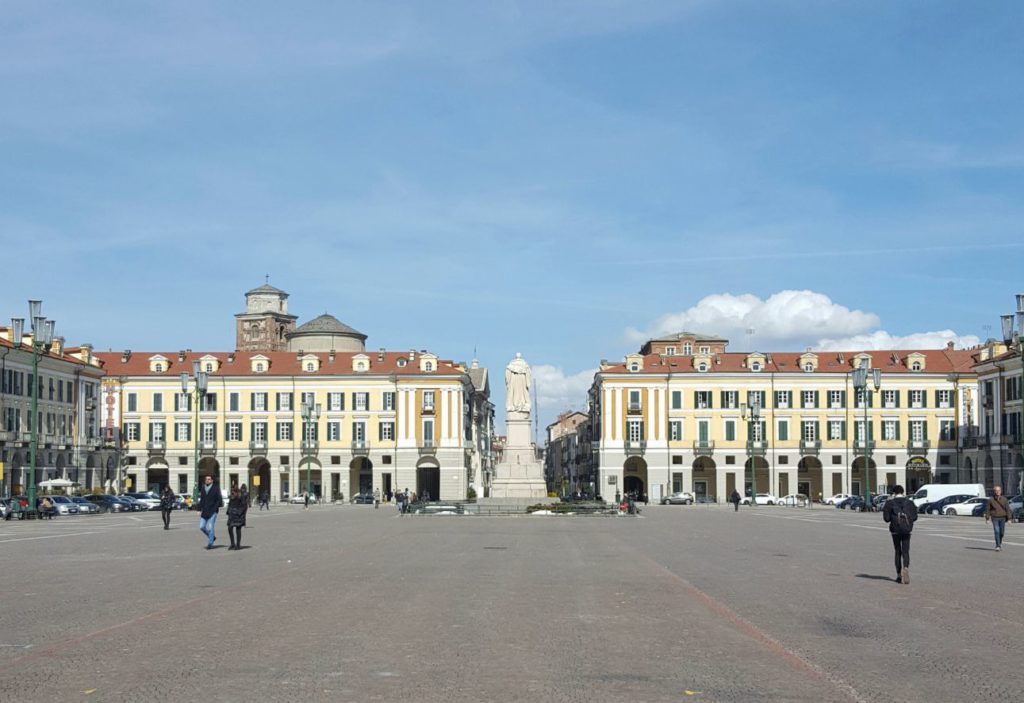
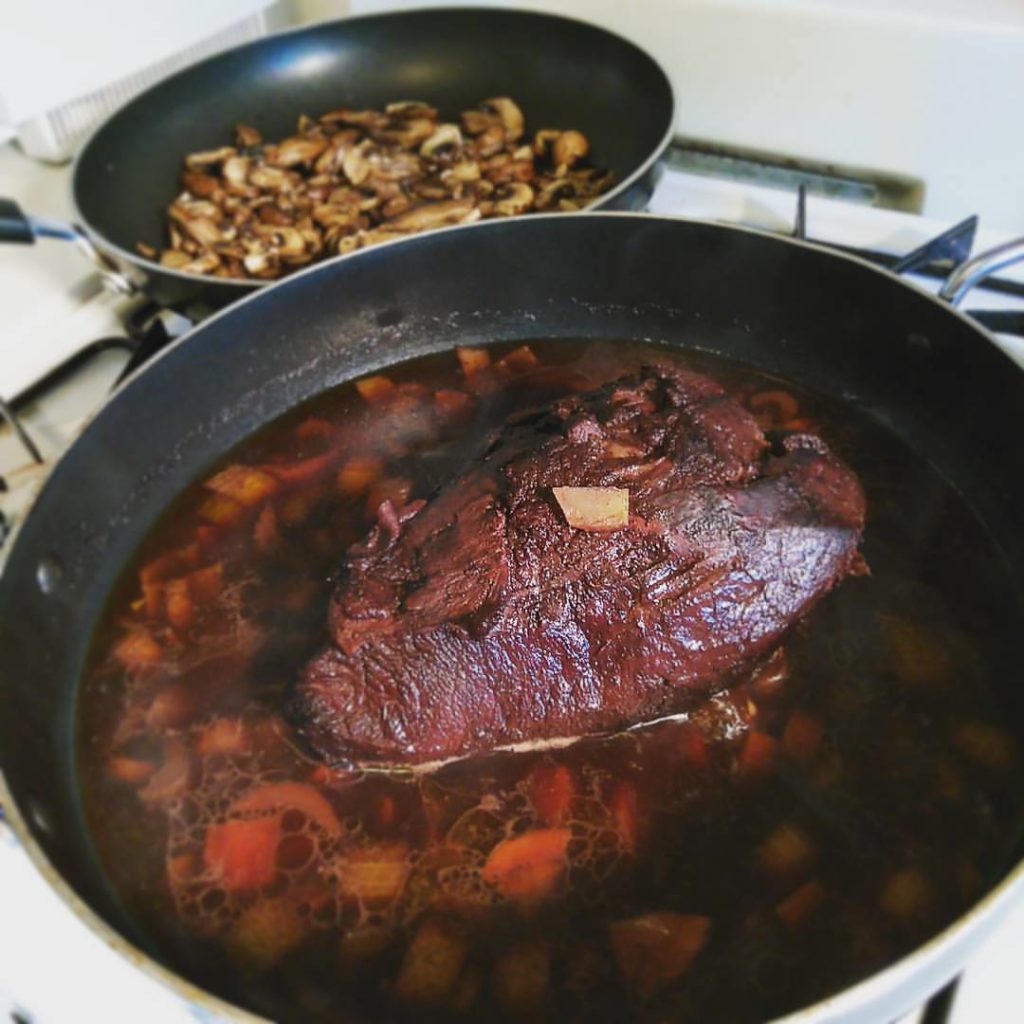
The hills around Cherasco were described by Napoleon as God’s gift and the food is second to none. Porcini, Truffles, Brasato al Barolo or Agnolotti del Plin are traditional, -must -try dishes when you are in the Langhe. But, don’t stop with just those.

art and culture, Piemonte, Italia Bound

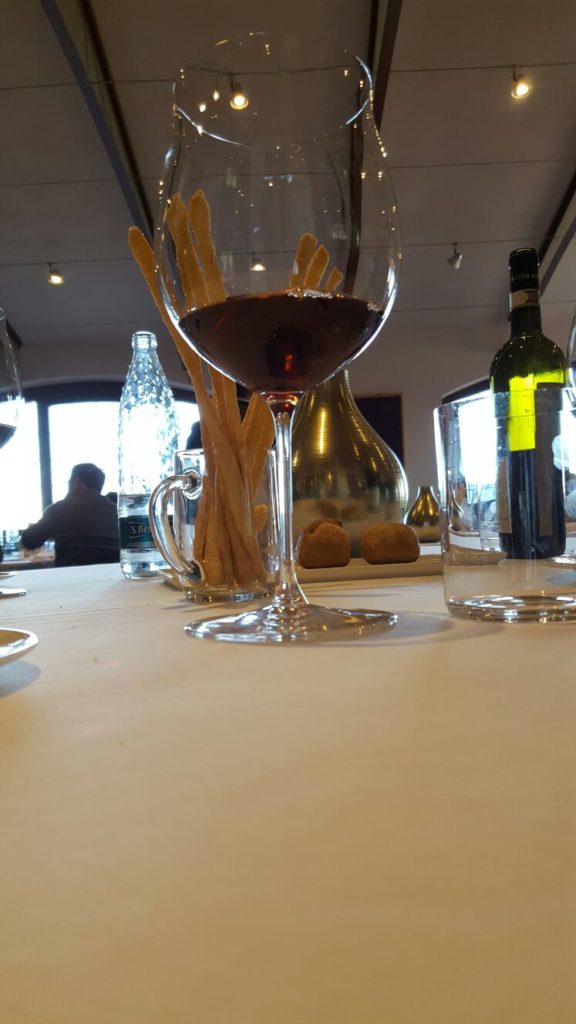
I’ve known individual that arrive at Milan Malpensa airport, rent a car and head straight to Tuscany because they want to experience the Italian wine region, not realizing much closer is probably one of the most incredible wine areas in the world. Of course if you are going to sip wine you need good food and the Langhe doesn’t disappoint. 

Brasato al Barolo, Langhe, Italia Bound
Brasato al Barolo

Canelli is in the province of Asti, not even two hours south of Milan. Here your memorable journey will start. Great food, amazing architecture, beautiful landscapes, renowned wines, and not only.

Grappa Before Wine?

 The hilltop town is our first stop. Canelli is on the border between Monferrato and the Langhe subregions. As we  first stroll through this beautiful town we need to make a quick stop at the Pasticceria Bosca and saviour some of the best pastries in the area, possibly with a glass of Moscato. Famous brands such as Cinzano, Matini & Rossi, Gancia are all from here.

The best comes as we arrive at the Distilleria Bocchino. Here you can take a tour of the distillery and sample some Grappa of Moscato. Bocchino in 1898 was the first to make grappa piemontese from single origin grape thus making it not only particular but also celebrated. Today this 5th generation family owned distillery produces world renowned grappa. 

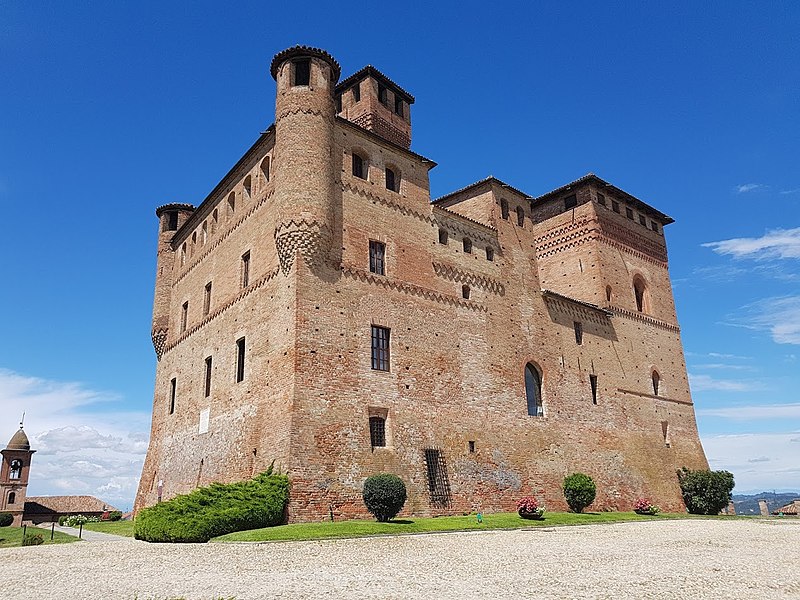
 Once back on the road, we head to none other than the town of Barolo. But, before approaching the town we will make a quick detour in Grinzane Cavour where its majestic castle overlooks the beautiful wine valley. 

Matteo Marra, Barolo, Langhe, Italia Bound
Matteo Marra, Barolo

Rolling Around

Off to Barolo for a quick lunch at one of its many phenomenal restaurants; my favorite being Matteo Morra. We then head 6 kilometres up the hill to La Morra where we stroll through Trails of Barolo to help us digest our latest culinary experience.

Architectural Wonders

We could be ready for a nap but instead we head to Dogliani. The Neo Gothic town, unique for this area, is a must for visitors. We will also visit the Bar Pasticceria da Cerrina for a caffè and fabulous pastries and then make our way to Cà Nueva. Here, the Abbona family has been producing wine since the 1800’s.

Several wines are produced at the azienda Cà Nueva and a tour of the structure and tasting is a great way to end a day after wandering through some of the best hills and valleys of the Langhe. 

Grinzane Cavour, Langhe, Italia Bound
Grinzane Cavour Castle

Relax and Re-charge

By now it is probably getting late so we head north to Alba where we can dine at one of the many restaurants or at my favorite; Boia Fauss Pensavo Peggio. Just the name is intriguing enough to make you want to try it. Later, sip the evening away as we recharge for the next day. 

Tomorrow is an Other Day

La Morra, Langhe ,Italia Bound, Italian holiday Davide Fattor
Barolo and the Langhe UNESCO Heritage

Alba itself is full day of exploring, and a must. Otherwise on to Bastia Mondovì and in particular the winery Bricco del Cuccù. If you do, and you should, ask to view the Chapel of San Fiorenzo. A rare sight of Goth Piemontese affrescos and view the famous affresco of the 7 Sins. There is more to see. Bra, Cherasco or the castles of  Serralunga d’Alba, and Roddi await us. Not to mention the many other towns, restaurants, shops, wineries and museums throughout the Langhe. 

This culturally rich region provides tourists, foodies, wine lovers and nature lovers some of the best kept secrets in Italy. The proximity to Milan, Turin, Genova and the easiness to access the small towns make the Langhe a must to any Italian itinerary. 

For ways to reach Italy check out my blogs on Getting Around Italy on Planes and Trains

Many thanks to Enrico of  http://www.langhe.net for his assistance and recommendations in creating this itinerary. 

Naturally this is only the tip of the “Langhe” iceberg and if you would like more information or help in organizing a trip through this region or any other part of Italy, drop a line here below or at contact me privately at info@italiabound.com

If you find this article useful please share it with your fellow travellers and on social media.

‘Till then…Buon Viaggio.