
Category

Lifestyle

Category

When Is The Best Season To Visit Italy

When is the best season to be in Italy?

 That’s the question that everyone asks me when we first consult. Italy is one of those destinations that is worth visiting all year round. 

Let’s try to break it down as every traveler has different dates available and certainly different interests.

Late Spring or Early Summer

My personal favourite, when I travel with my family, is late spring or early summer – particularly the month of June.

School is almost out. Kids are not missing much school and the weather is perfect. 

The not-so-hot weather allows for comfortable hiking, biking and sightseeing. Attractions are not as busy. We are even able to enjoy the beaches, the water and the sun.
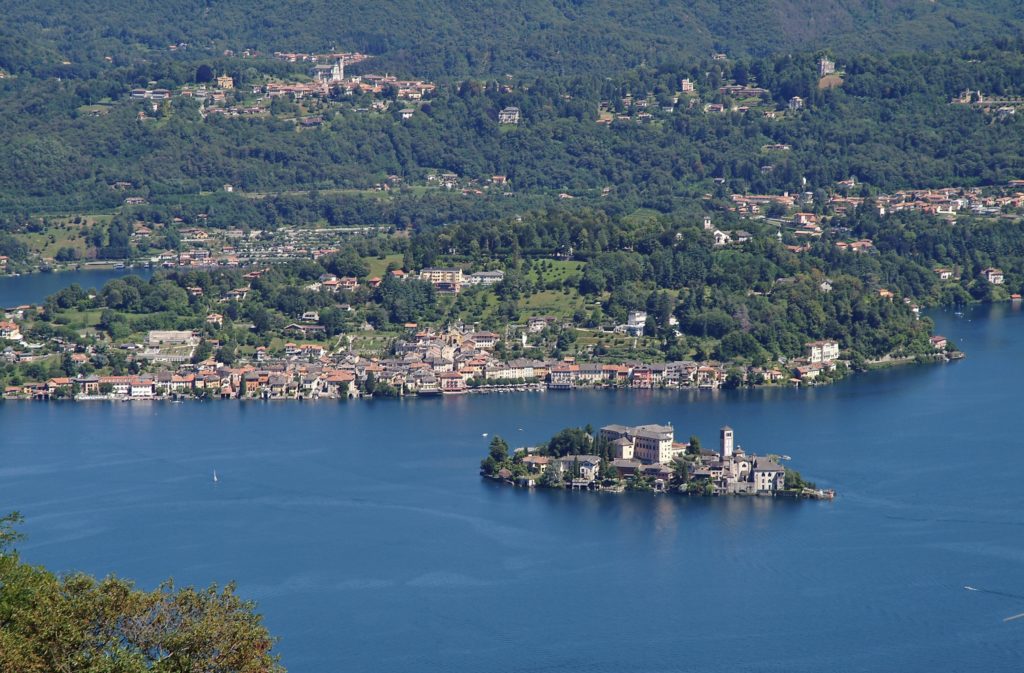
Lake Orta and San Giulio in the Province of Novara in Piemonte

Prices tend to be reasonable. Hotels and agriturismi have more vacancies and are more willing to modify dates, if needed, since the high season hasn’t arrived yet. 

L’ Autostrada (freeway), although always busy, is not overcrowded with tourists. Most Italians are still working at this time of the year. All the attractions, museums, castles and parks are open.

Visit my blog on 3 Thing to Know About driving in Italy to better understand the Autostrada

Early Autunno…Fall

That said, if I were to travel just with my wife or with an other couple I would opt for a late October, or early to mid November.  This particular time offers warm days for leisure and cool mornings for great walks, hikes and mountainous excursions.

You can also wander through the streets of sun-kissed towns without sweating and melting away. Touristy towns are less visited. Hotels and accommodations are not so difficult to find and, in case you want to add an extra night, hotels can easily accommodate you.

The changes in the season brings beautiful colours to the countryside. Fall is ideal for visiting markets and autumn sagre. The food, well the food is probably the best during this season. Local ingredients and specialties are highlighted in the fall food fairs. Naturally, there are plenty of regional wines to go with all of those fall hearty dishes.

It’s the perfect season to be in Italy and exploring its culinary specialties. Early morning walks through vineyards or chestnut-treed hilltops help melt away the extra calories consumed the night before.

Christmas Season

If you choose to go in December then your choices are endless. The south still has a warm, fall-like weather but the northern regions can offer more options between low-altitude, cooler temperatures and possibly even skiing opportunities further up the mountains and in the Alps.

Usually the good snow doesn’t come until late December or well into January, but if you are willing to climb enough you can come across ski resorts that are fully functional. 

Christmas markets or Mercatini di Natale adorn many mountain towns but major towns and cities do also a fantastic job in dressing their centri with lights and Christmas decorations.
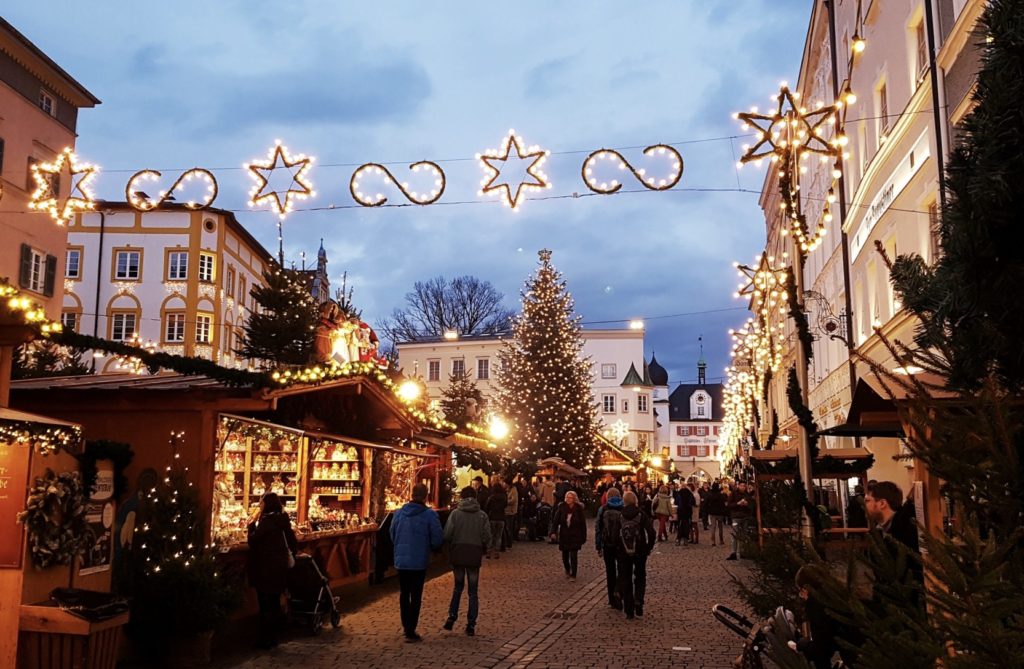
Natale Italia Bound, When is the best season to visit Italy
Christmas Market in the Trentino Region

The warmth of the Christmas Season is visible throughout the country. There is nothing more cozy than to sit and people watch while sipping on a hot, thick cioccolata calda at a outdoor caffè.

Inverno…Winter

As in most of the Western world, days are shorter in the winter therefore you do have a limited daylight hours for sightseeing. Start earlier in the morning. If you are driving you may want to finish your journey while it’s still light. That way you can get a bearing on your destination and surroundings more easily.

Italy in February? Be prepared for Carnevale – especially if you are planning to visit Venice. Book well in advance – even one year prior. Expect to pay top Euros for those rooms in Venice or Viareggio.

Check out my blog on What You need to Know Before Booking Accomodations in Italy, to help you sleep better .

Plan well in advance. Be prepared for snow as well in hilltop towns and mountain terrains. Don’t be surprised if some cities in Northern and Central Italy get the white stuff. In some cases, quite heavily.

Usually snow doesn’t last long, but can interfere with your plans. If you are looking for a milder, possibly snow-free holiday during those months, then head south to Sicily, Sardegna, the Amalfi Coast, Puglia or even Rome. 

Primavera…Spring

Spring in Italy brings the awakening of the country. It’s like opening all of your windows in the morning and taking in a deep breath of fresh air. Italy is one beautiful garden and no other season seems to bring that out like spring.

Il Bel Paese is rich in spring fairs, festivals and folklore events. All of Italy’s gardens are in full bloom. One of these is the Flower Show in Perugia inside the Giardini del Frontone, or if you are in Sicily, you can not miss the Tradizionale Infiorata di Noto. But those are just two of the many.

Because of the warmer temperatures biking, hiking are perfect activities if the sun is shining. Remember to bring along an umbrella because although the climate is milder it still rains at times.

In The Heat of Estate…Summer

That brings us to summer, mainly July, August and September. Summer in Italy is a frenzy of tourists from all over Europe and the rest of the world.

Add to the international mix, over 22 million Italians. Yes! One third of all Italians holiday in the summer in Italy so everything is more expensive and, naturally, busier.
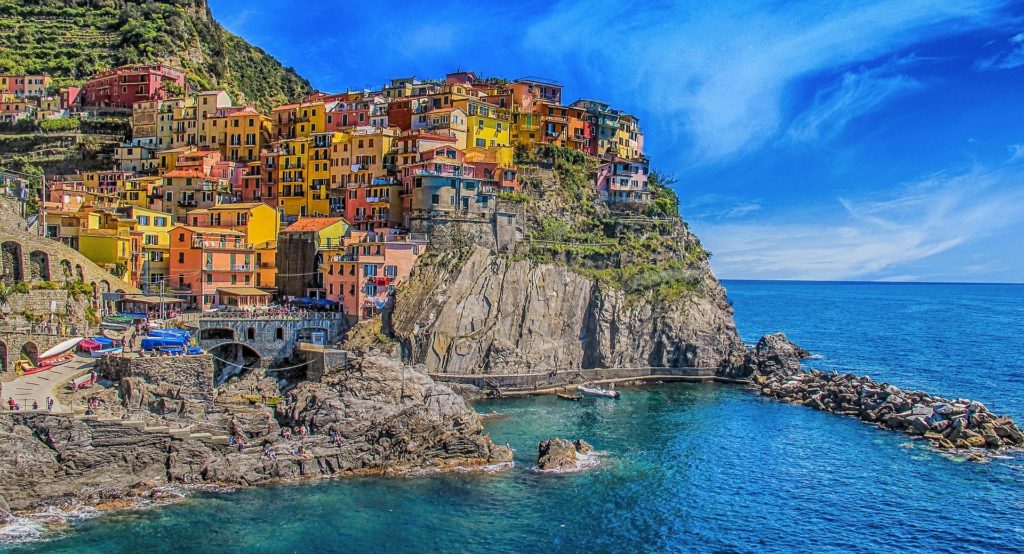
Cinque Terre Italian Beach
Cinque Terre

The good thing is that most Italians and many foreigners hit the beaches, therefore many areas with cultural interests are somewhat less busy. It’s also quit humid and hot so early morning excursions are the best. A late, late dinner is ideal.

Best places to visit in the summer are the beaches and those are all over the coast, but the lakes and mountains are ideal as the temperatures tend to be more favourable.

Cities such as Rome and Florence are hot and muggy, as I said, and there is nothing less appealing then slowly climbing the 330 stairs from the terrace to the Cupola of St. Peter Basilica while following fifty other sweating tourists.

Don’t get me wrong, it’s a must if you are visiting the Vatican. The Cupola is a masterpiece by Bernini and Michelangelo. (Both artists poured their efforts into its creation, but Fontana had to finish it as Michelangelo was already dead by then.)

It’s just that it would be more appreciated during a cooler month or, at the very least, very early on a hot summer day.

Anytime

Any time you have the opportunity to find yourself in Italy is a good time to discover this phenomenal country.  Regardless if you have one weekend or one month, Italy is a must. Each corner of the country will amaze you.

So pick your dates, book the flight, and go! You will not regret it and best of all, visiting Italy once will make you want to go back over and over again. 

‘Til then… Buon Viaggio. 
Why Spending Time On a Beach in Italy is a Must

Life is a… Beach. Italian Style

So, you want to go to Italy and take advantage of the beautiful summer weather to soak up some sun and swim in the blue warm waters of the Mediterranean. You are hoping to find a nice secluded beach where the only sounds are the waves crashing on the beach.

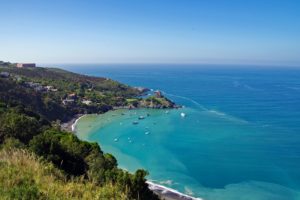
San Nicola Arcella in Calabria

Unfortunately more often than not, these places are rare to find, as most beaches are often crowded by beachgoers. If tourists flock the scogli (reefs) of Sardegna and Campania or maybe Liguria too between October and May, then that may be the case. In the summer months, on the other hand, Italians live for the beach and water, so they tend to crowd them.

You Wonder Why?

Italian beach culture is a love triangle between Italians, the sea and the sweet life of doing nothing.

21 million Italians will hit the Italian beaches between July and August. Add a “couple” of foreigners, too.. well more like several millions.

Italians rush the beaches for at least 10 days but many will extend their holidays for the whole month.

Many are willing to work extra weekends, save on dinners, sacrifice make-up and fashion purchases so that they can add extra days to their beach holiday.

No other country has a need to be at the beach and under the sun like Italians do. They justify all of this because it’s the only time that they can completely detach from the day to day stress of work, kids, traffic, crowds and everything else that drives them crazy during the year.

54% of Italians will be going on a beach holiday during the year.

85% will go in July and August.

60% of them will stay at least 10 days.

So What Do Italians Do at the Beach?

A typical beach holiday to Italians consists of the following:

  • wake up
  • have breakfast
  • pick up all possible newspapers
  • walk to beach
  • sit under the rental umbrella on their rental loungers until noon
  • head back to hotel or apartment for lunch
  • back down to the beach at around 3 PM, and stay till 6 PM.
  •  shower at the hotel or apartment,
  • go to dinner and then for a passeggiata (stroll) and have a gelato.
  • They do this everyday that they are on holiday.
Don’t Worry… Be Italian

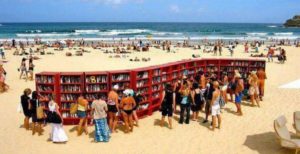
Italians’ only worry is about how dark of a tan they want. This is the time that the saying “il dolce far niente” (the sweet doing nothing ) comes in to play and they bare no excuses for it. During their holiday, each Italian will read 5000 books and newspapers. They even have libraries on the beaches to help with their choices.

Add a few walks down the beach, build a half a dozen sand castles. If you really want to feel Italian, build a sand race track with bent turns and tunnels, get yourself some plastic marbles and race for the ultimate prize…A ghiacciolo al limone ( lemon icecicle).

Now you are set!!

Library on Italian beach

Conversations with umbrella-neighbours centre around politics and soccer or,  more recently, about food and recipes.  Recent surveys show that these are now the most talked about topics on beaches.

Ongoing arguments with their kids about getting in the water too soon after having had a snack are also often overheard.  Italians believe that one should not enter the water for at least three hours after having had food (joking, not joking!).

You Pay for the Convenience

All this doesn’t come cheap of course as the bagni or beach rental sites charge a fair amount for those umbrellas and chairs. In Rimini for instance, one umbrella and 2 sun chairs in the first row in some bagni  will cost around €25 per day or €124 per week. Expect to pay a lot more in more popular places such as Tuscany, Sardegna and Liguria. Even up to €4000 for the season.

Italian beach holiday
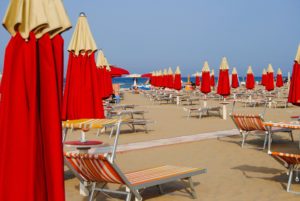
Endless umbrellas in Rimini

Public beaches are hard to come by and they are not so… convenient. Italians like convenience, and don’t mind crowds. So to pay for an umbrella or access to a caffè/ bar/ ristorante right on the beach to them is worth the cost. In the evening, life gets even better as the town is invaded by the beachgoers as are the nightclubs, discotheques and restaurants.

Where to Stay

Many Italians like to rent apartments. Hotels are popular, but only because Italians opt for a pensione completa, where all three meals are included in the price.

More often then not, they also tend to go back to the same seaside town, same bagno and even the same row and spot year after year. So their umbrella neighbours are the same every year, making their holiday more familiar as it is a sort of reunion.

I remember as a child spending the whole summer in Lignano Sabbia d’Oro with my grandma and uncles. Every year the same people from Rome would be our neighbours. I remember them always commenting how much I grew from the previous year and over the years they became sort of surrogated relatives. As an adult I even visited them in Rome.

If you are looking for that quiet secluded beach, Italy has plenty throughout the peninsula and you’ll be mesmerized by their beauty, tranquility and cleanliness. But, at the same time, spending a couple of days in a crowded one that defines Italian living, is something special too. At least once in your lifetime you should enjoy the “dolce far niente”. 

Italian invented it and are masters at it. Why not try it.


Five Beaches Where You Must Go to Experience il Dolce Far Niente

Rimini or Riccione in the Emilia Romagna region are probably the most famous beaches of Italy amongst Germans and most European tourists. Endless miles of silky sand and lightly sloped coastline with perfectly tempered water. Ideal for adults and children alike.

Lignano Sabbia d’ Oro is just one hour east of Venice. This golden sand town has beautiful beaches and reasonable rates.

Senigallia. Further south from Rimini by 100km and closer to Ancona on the Adriatic side of the Italian coast. Great beaches, great food all with warm southern hospitality.

Versilia. You are in Tuscany and the beaches of Versilia stretch from Forte dei Marmi to Viareggio. Lido di Camaiore probably has the best beach, but anywhere along this 30km stretch you can’t go wrong. Prices in Tuscany tend to be one of the highest in Italy.

Alassio. This is a small stretch of beach in the Liguria region in the province of Savona. Stupendous small town on the Ligurian Sea rich of entertainment, restaurants and shops.

BONUS Beaches…

Don’t forget the real south, Calabria, in particular Roccella Ionica. The many Islands including Capri, the Emerald Coast in Sardegna and of course Taormina in Sicily

This is Why You Should Go to Italy… It’s An Experience Not Just a Holiday and see for yourself why millions of tourists flock the Italian peninsula every year.

“Til then…Buon vaggio

Are  you travelling to Italy and are interested in my assistance, or would like to comment on my post?  Just drop a line below or contact me privately at info@italiabound.com.


5 Things to Know About Dining in Italy


Italy’s food culture is unique in many ways. From their passion with slow food, to the diversity of their cuisine varying from one region to an other, and often from town to  town. Food and eating together is the reason why Italians exists.

Life, relationships, family and even work often revolve around the table. Food is to Italians what the heart is to our body. Without it it’s society would die. Everything is planned around that. Although eating is important, just as important are the Italian etiquette around food and restaurants. often quite different from  North America.

 No Need to Tip

1- Unlike in North America where staffing is inexpensive because we expect the restaurant goers to pay for the hired help with tips, in Italy the servers and cooks have a set labour contract. Their wages are completely covered so you don’t need to tip. It’s never expected, but if you like to, it’s a minimal amount.

When is the Best Time to Eat?

2-  Restaurants are not always open ready to serve anytime you feel hungry, unless you are in a tourist infested area. Restaurants tend to open just before noon and stay open until 2:30 PM or so. In some cases, they don’t take tables past 2:00 PM.

They re-open again later around 7 o’clock in the evening and dinners are served until late.  It all depends on the location; downtown, suburbs, big cities, small towns or high traffic areas on highways

. The seasons also play a big role in when restaurants open and close. Most places are closed one day, some two days of the week, usually Monday, Tuesday but also Wednesday or Thursday.

That Seems like a lot of Food

3- Italians eat in courses at both lunch or dinner. They’ll have at least two plus the caffe.

Antipasti. (appetizers) Not to be confused with aperitivi.

Primi. (first dishes) usually those are starches, such pasta or risotto or soup.

Secondi. (second dishes) tent to be meats, fish. Often you would receive the meat by itself with no sides.

Contorni. (side dishes) Arrive with you secondi maybe salads, steamed and cooked vegetables or fries, etc. etc.  These are brought on different plates.

Formaggi (cheeses) Usually this will be a selection of local cheeses.

Dolci. (dessert)

Frutta. (fruit) It is common to finish with fresh fruit. And last but not least…

Caffè. This is always an espresso and sometime it’s corretto which means that grappa or another kind of liquor is added to the caffè. Never ever order a cappuccino or a macchiato at end of meal. It’s frowned upon.

Cover Charge?… for What?

4- Coperto is a cover charge for each person sitting down having dinner. This varies from 1 to even 5 Euros or so depending on the type of restaurant. A pizzeria is usually 1 to 2€ for instance. Osterie style restaurants may not even have one. High-end restaurants will be more. The charge goes back to the medieval days when the inns would charge for using the place when customers would bring  their own food and just used the inn as a refuge from the weather. The cover is for the linen, cutlery and bread. This would be posted on the menu so there are no surprises.

Free Food?

5- Aperitivi are not antipasti, so if you drop in at a bar around 6 o’clock or so you can go for a aperitivo and in most cases food is served with it free of charge. Yes, the food is free, as long as you buy a drink. Some bars (bars in Italy are cafés or wine tasting shops) offer apercena, which translated is aper (aperitif) and cena (dinner).

Here you can literally eat to your heart’s desire and all you pay for is your drinks. Often you do this standing up and/or outside the bar in the street while wandering in and out sampling and eating finger food and chatting the night away. I recommend finding at least one of these places while you are traveling. It’s a great way to see the Italian dolce vita at work while sampling different dishes and wines. Here you pay before you eat.

BONUS…

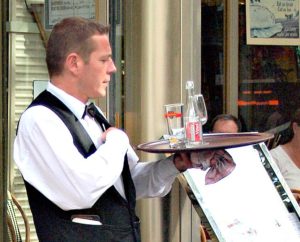
You must always ask for the bill, as waiters will not bring it to you automatically at the end of your meal. It would be considered extremely rude to do that. The reasoning behind this is that the evening is not finished just because the food is. Italians often stay and talk for hours after the caffè and only when they are ready to leave they ask ( by a hand wave) the bill.

DOUBLE BONUS…

Lately all over Italy and mostly in the larger cities a new phenomenon  is occurring.

Restaurants where the “ imbonitori” stand outside and invite you in. You’ve seen them in the Latin Quarters in Paris and there they belong. But in Italy…No thank you! Often these hosts offer a free appetizer or a drink (but you will pay for it in other ways) to entice you to enter. They may even tell you that they serve the best pasta in town.

It’s pretty obvious that these are only really inviting tourist as regular restaurant goers would never think of being duped by these individuals. If they need to ” invite”, the food is usually not that good. Even Italian tourists in their own country would never go here so why should you?

AVOID at all cost these places. Stay clear. But, if you do go, you then lose the right to complain that you’ve been to Italy and the food was terrible.  You have been warned.

“Uomo avvisato mezzo salvato”.

Translation : Man that has been warned,  is a man half saved”

‘Till then… Buon Viaggio!

Are  you travelling to Italy and are interested in my assistance, or would like to comment on my post?  Just drop a line below or contact me privately at info@italiabound.com.


Local Dishes in Italy: 5 Things to Help Identify Them

Local Dishes, Local Dishes , Local Dishes

1- Savouring local dishes is a must when travelling throughout Italy. If you see dishes named after the towns you are in, you won’t go wrong. When in Milan, for instance a Risotto alla Milanese would be a give-away that it’s a local dish.

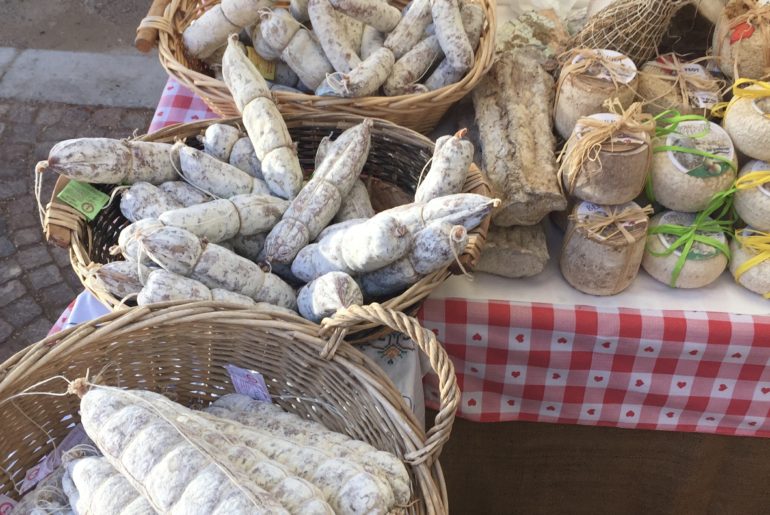
Val Sesia italiabound.com slow food local ingredients
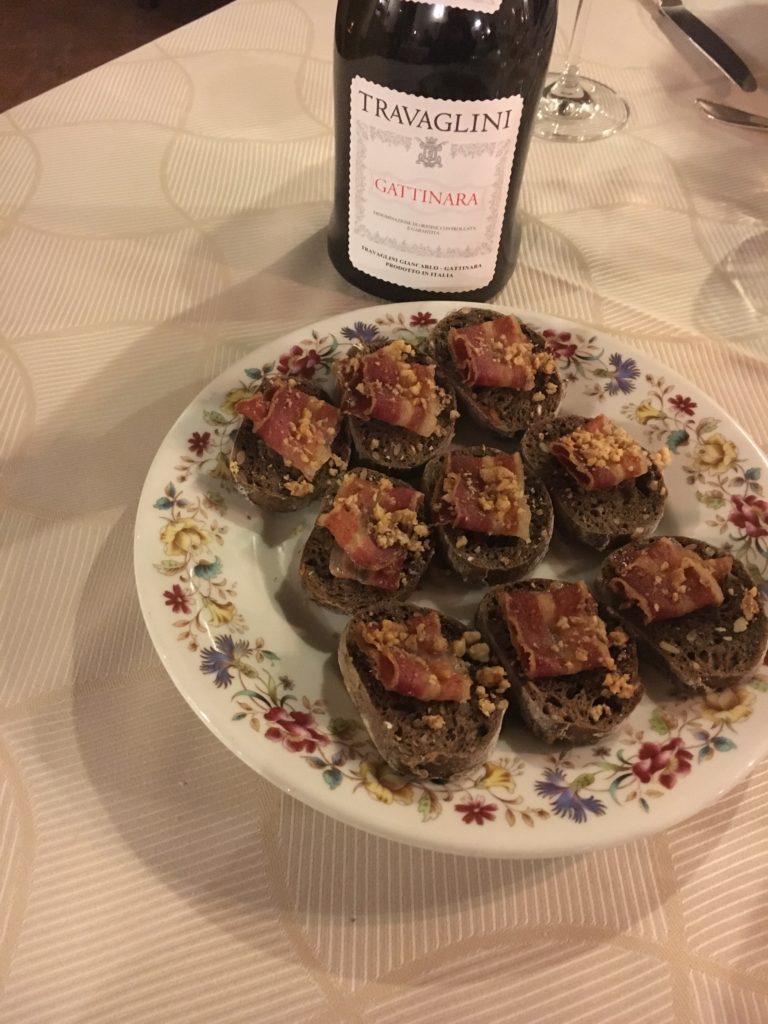
Rye bread tartine with lard, honey and nuts… and a bottle of Gattinara

2– Look in the menu for “piatti tipiciwhich means, “typical dishes”. Furthermore, if you dine at an osteria or trattoria, most likely, they would promote local dishes.

italiabound.com Il Cavenago slow food
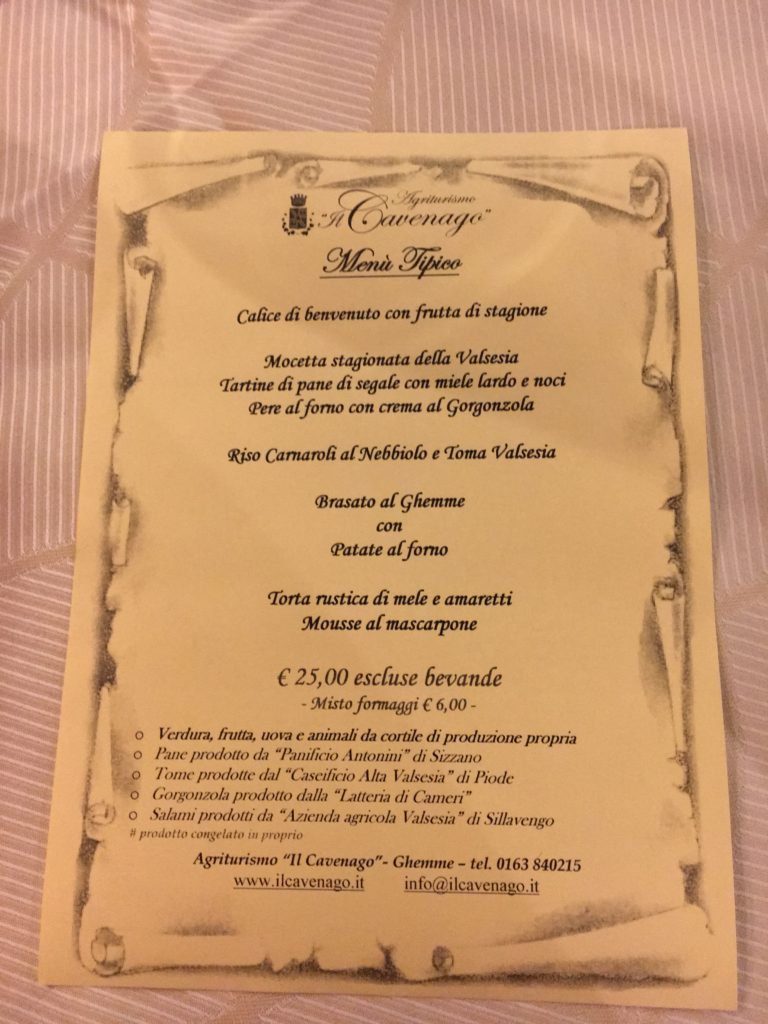
A menu promoting local producers, traditional ingredients and homestyle dishes at agriturismo Il Cavenago

Farmhouses Mean Freshness

3- Agriturismi are a guarantee for fresh, kilometre-zero ingredients. These farms grow the ingredients right on site. As a result, their neighbouring farms also often produce many of the ingredients for their menus, as the photo above illustrates. You can’t get it any fresher.

4- Look for DOC and DOCG wines. Hence, the origin of the ingredients is controlled and guaranteed. On the labels of cheeses and insaccati you’ll see the DOP stamp. Those ingredients are the best in quality, guaranteed and protected. 

You can purchase DOGC and DOP products anywhere in the world. Ask if a DOP product is local. If not, you know you’ll be eating quality products, just not from the area that you are in.

Read my blog on 13 Italian Cultural Habits... to above all, have a better understanding of Italian food culture, while travelling through Italy.

Markets and Festivals

5- At a mercato look for seasonal vegetables, fruits. No one toots their own horn better than Italians do. As a result, local businesses and towns love to promote typical ingredients, dishes and history.

slow food Italy food culture La Morra Italiabound.com
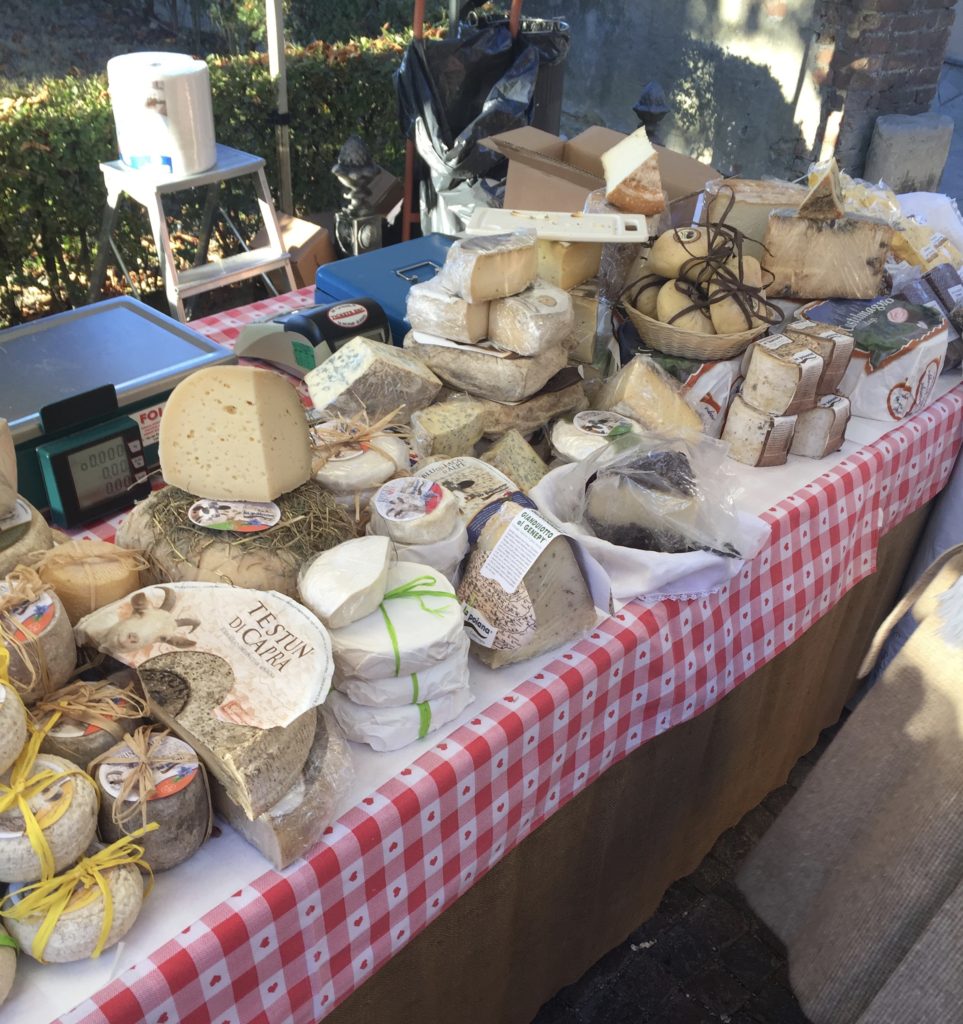
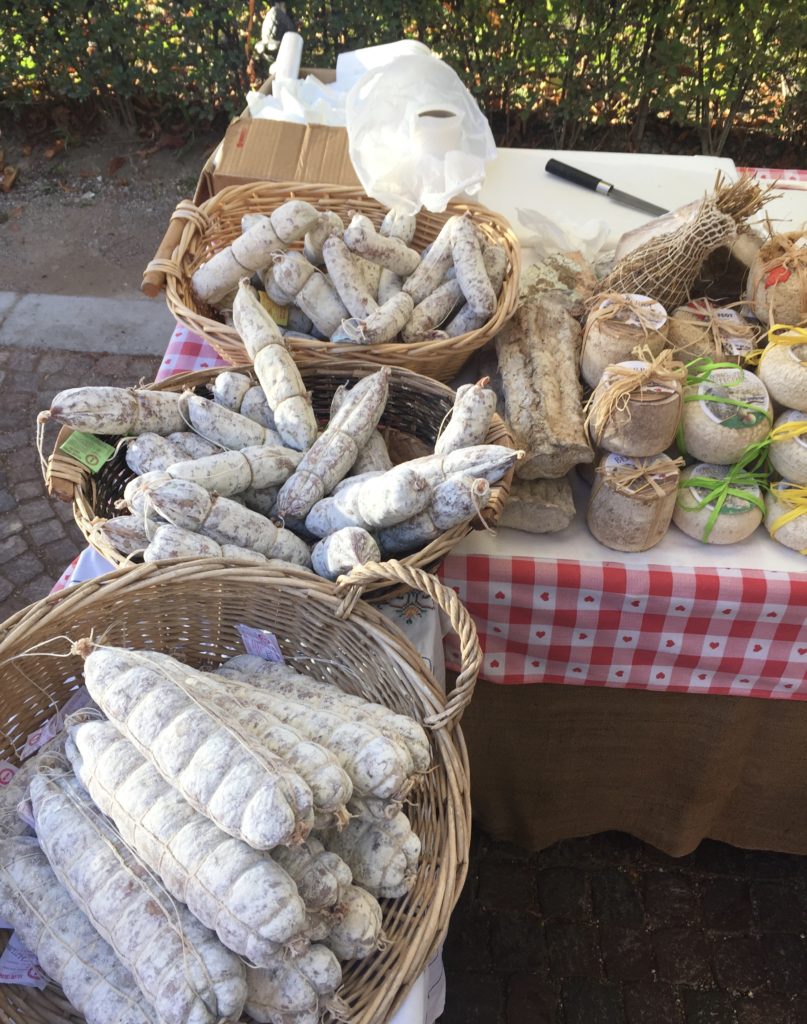
fresh cheeses at a market in La Morra in the Langhe

Bonus

6- Attend festivals or sagre in the areas that you are visiting. You may want to ask where and when these events are. Visit websites that promote these sagre. All over Italy, towns organize festivals to celebrate a harvest, a season, or a saint of some sort and therefore, will use any excuse to savour local traditional specialties.

Live Like the Locals Do

Tourists are not the only ones flocking to these sagre to try local dishes, drink local wines, and dance the night away. It has been an Italian way of life for generations.

One of my favourite hands down is Friuli DOC. This festival starts on the second Thursday of September. Over 100 000 visitors pour into the streets of the North Eastern city of Udine daily for four straight days to experience regional dishes, wines, spirits,  music, dances, and costumes.

slow food Italy food culture italiabound.com La Morra

Every piazza, viale, and roundabout has kiosks or tents sampling food from all over the region of Friuli Venezia Giulia. It’s an amazing event…and what an event it is. If you find yourself in the vicinity of Udine during  that week, you must take a detour and visit it at all costs.

The warm summer months bring people out to the many sagre. Italians spend  their weekends traveling from town to town in search of great food, wine, and folklore events. They definitely know how to celebrate life.

Eating fresh food and celebrating life is quintessential to Italians and probably the main reason for their existence.

If you interested in more information about Italy or help in organizing a trip there, please leave a message below or contact me privately at info@italiabound.com

‘Til then…Buon viaggio!

3 Things to Know about Gratuities in Italy… To Tip or Not To Tip

What about gratuities? Do I leave anything for the waiter?

How about gratuities? Clients often ask me that simple question. Its a cultural difference that we sometimes don’t understand.

1- Gratuities or Tips are a personal choice that are always appreciated, but never taken for granted or expected. Unlike North America, tipping is not expected and it doesn’t go towards subsidizing an income that should have been taken care of by the employer. Italians are proud people and one mustn’t confuse gratuities with a hand-out.

italiabound.com gratuities waiter

The best way to know if you should leave a gratuity or not is to ask yourself the following question: Am I tipping because he or she provided an exceptional service and went above and beyond my expectations? If the answer is yes, then a token of appreciation can be left on the table. Nonetheless, it is not mandatory. It should be out the goodness of your heart and not what people will think if you don’t.


  5 Things to Know About Dining in Italy


Know Who You Are Tipping

2- You never tip the owners of the business, such as in a restaurant, a salon,  or mechanic. Nor you should give gratuities because you feel bad for that individual for doing his/her job. Again, Italians are proud, and if they feel you are tipping because they think that you feel sorry for them, then they may see this as an insult and just may refuse the tip. If they do refuse it for whatever reason, please don’t feel insulted. Understand it and move on. Don’t force it.

3- Waiters have a set salary, as well  as tour guides. I would recommend a tip of appreciation for guides for showing you the sites. Taxi drivers are on salary so there is no need to tip. In any case, you just round the amount to the nearest Euro or so.

Rome italiabound.com gratuities waiter

A Gift Goes Further

Bonus- In some circumstances, it’s more appropriate and also more appreciated to give someone a gift instead of money for having gone beyond the call of duty. That would be more for owners of businesses or maybe the manager or concierge of a hotel. If you stayed several nights there and they accommodated with concert tickets, museum passes or really good recommendations for restaurants, then consider it. If you take in a cooking class for instance as a token of appreciation such as a gift, it goes further than money since in most cases it’s the owner/chef that gave the course… And if the gift is from your country… better yet. Italians appreciate when individuals go out of their way to make them feel special or appreciated and sometimes money is not the only reward.

If you know that you may possibly be running in one of these situations, you could purchase something in your country and have it ready if needed on your travels.  If someone really did something great for you,  you can always send it once you returned home.

‘Til then…Buon viaggio.

Are  you travelling to Italy and are interested in my assistance, or would like to comment on my post?  Just drop a line below or contact me privately at info@italiabound.com.